


钛合金在电子领域的应用
查看更多
If you're sourcing metal for a new project, you've probably run into three names over and over: Grade 1, Grade 2, and Grade 5 titanium. A Grade 2 titanium bar sits right in the middle of these options, and that middle ground is exactly why so many engineers pick it. This guide breaks down the real differences in strength, corrosion resistance, and cost, so you can choose the right grade without guessing.
You'll see plain numbers, honest trade-offs, and practical buying tips pulled straight from industry standards. No fluff. Just what you need to make a confident decision for your next order.
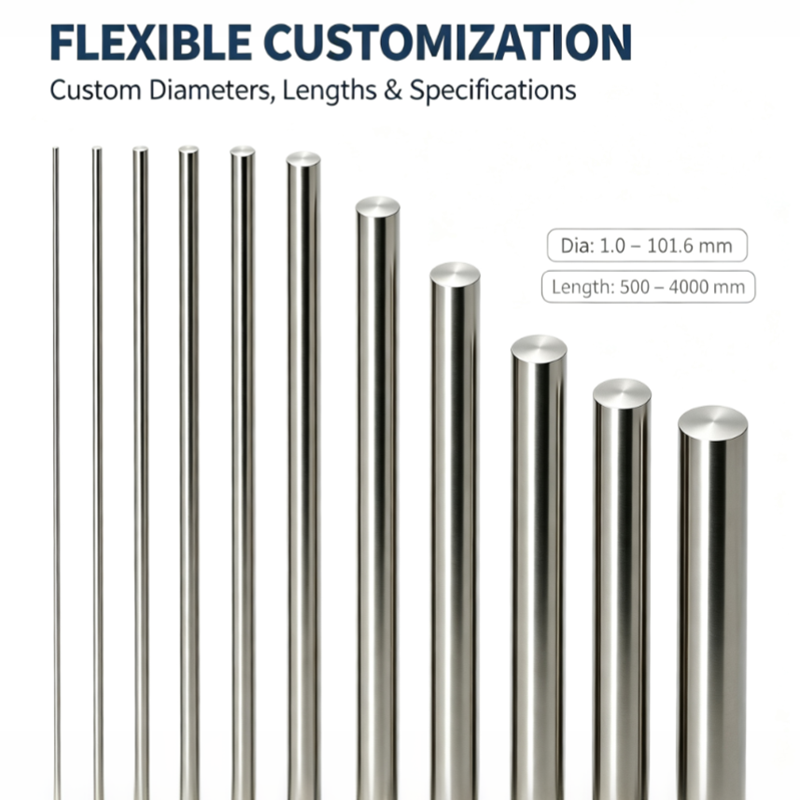

An unalloyed CP titanium with small, controlled amounts of oxygen, iron, carbon, nitrogen and hydrogen that set its strength-ductility balance. Grade 2 sits between the soft Grade 1 and the stronger, less formable Grades 3-4. It is supplied as round, square, flat, forged and custom-machined bar.
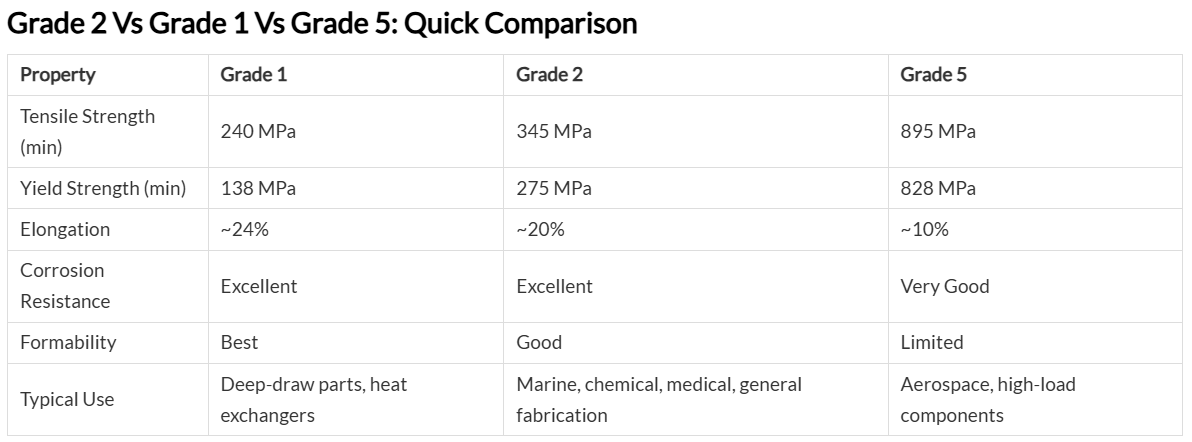
Typical minimum values for annealed Grade 2: tensile strength 345 MPa, yield strength 275 MPa, elongation 20 percent. Actual figures vary by product form, size and standard, so confirm them through the material certificate. The result is enough strength for many parts while staying easy to fabricate.
A thin oxide film forms naturally and re-forms after minor damage, protecting the surface in seawater, chloride process streams, oxidizing chemicals and neutral water-based systems. Performance still depends on temperature, concentration and pressure, so review the full operating environment before selecting.
Good ductility supports cutting, turning, milling, drilling, forming, forging and welding. The low thermal conductivity of titanium keeps heat near the cutting zone, so use suitable tooling and controlled conditions; clean surfaces and proper shielding are key when welding.
Grade 1 gives maximum formability; Grade 2 is the balanced industrial choice; Grades 3-4 add strength but lose formability; Grade 5 (an aluminum-vanadium alloy) serves aerospace and high-strength needs. Grade 2 wins when corrosion resistance and fabrication matter more than peak strength.
Chemical processing (reactor, heat-exchanger, pump and valve parts), marine and offshore equipment, power-generation condenser and heat-transfer systems, and lightweight industrial or non-critical aerospace components. Match the grade to the exact service conditions.
A higher purchase price than steel can still be the cheaper option over the service life of a product by cutting replacements, downtime and maintenance. Before ordering, confirm: the grade and standard (Grade 2 / R50400 / ASTM B348); a test certificate for chemistry and mechanical properties; size and tolerance; surface finish (forged, peeled, turned, ground, polished); and traceability such as heat numbers and non-destructive testing.
Choose Grade 2 when you need strong corrosion resistance, moderate strength, good ductility and low weight. Look to another grade for very high strength, higher temperature capability, or medical- and aerospace-specific standards.
If you're ready to request a quote, a sample, or technical guidance on which titanium grade fits your project, reach out directly
Email: sales@globaltigroup.com
The team can walk through your specifications, confirm certifications, and arrange fast delivery for your next order.

