


The manufacturing process of titanium tees
View More
Since the discovery of titanium metal, the chemical industry has always been its largest application market. Over the past 12 years, the annual consumption of titanium materials in the domestic chemical industry has consistently exceeded 15,000 tons, highlighting titanium's core position in this field.
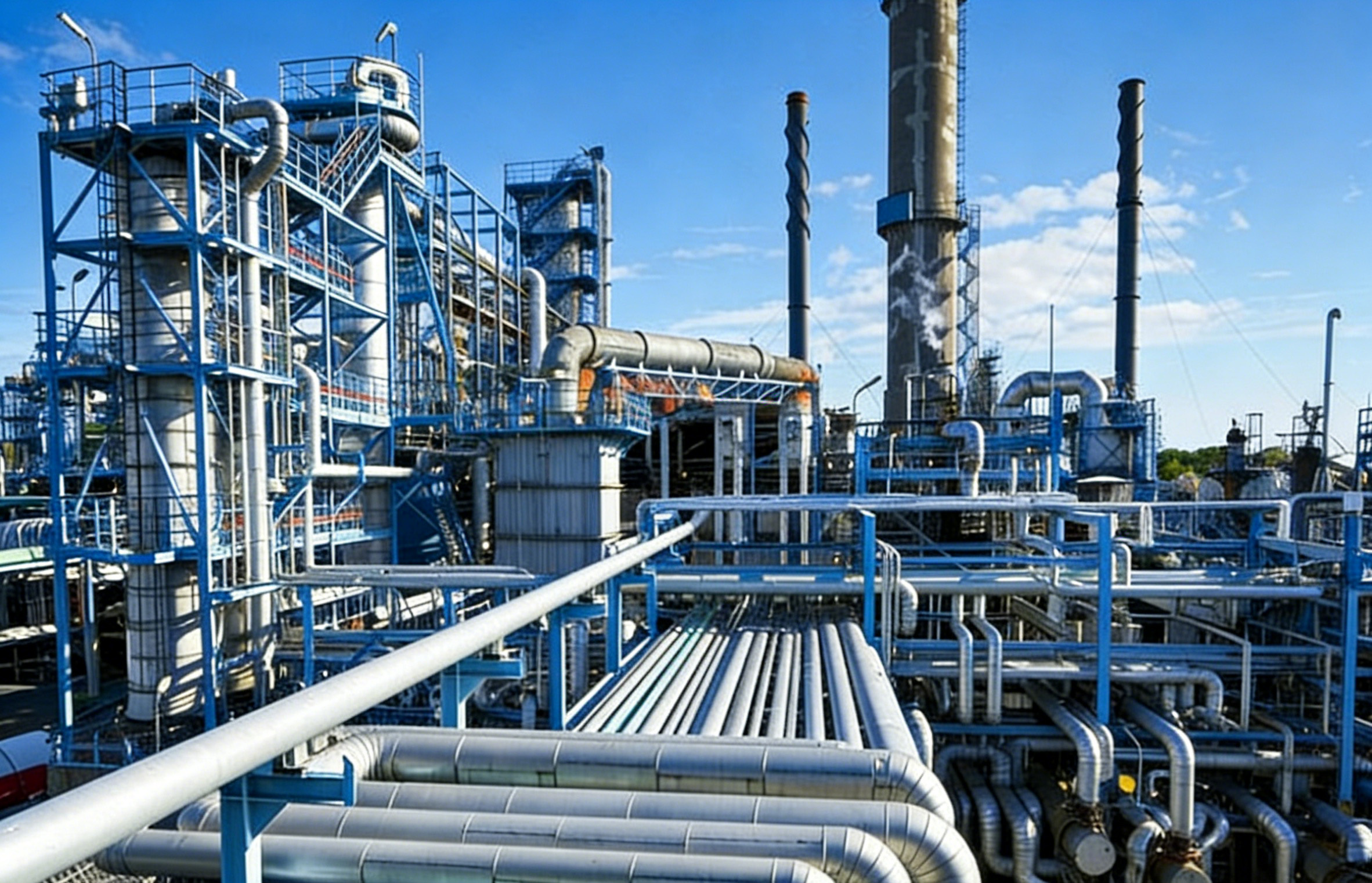
Performance Advantages: The Perfect Combination of Strength and Toughness
Titanium alloys possess excellent mechanical properties: their specific strength is 3.5 times that of stainless steel, 1.3 times that of aluminum alloys, and 1.6 times that of magnesium alloys. This means they can withstand greater impact and pressure under the same weight. Their tensile strength reaches 1.5 to 2 times that of other commonly used alloys. This high-strength characteristic makes them particularly outstanding in deep well drilling—the drilling process is safer, equipment is more durable, and they are especially suitable for complex well conditions such as ultra-deep wells and short-radius wells in the Northwest oilfields.
Technological Innovation: Solving Drilling Challenges in Complex Structural Wells
To enhance oil recovery, reduce extraction costs, and extend oilfield development cycles, complex structural wells such as extended-reach wells, short-radius wells, and sidetrack horizontal wells from existing wells are becoming increasingly common. However, conventional drill pipes face severe challenges under these working conditions: in ultra-short-radius horizontal wells with a radius of curvature less than 18 meters, intense alternating stress often leads to fatigue fracture of conventional steel drill pipes, causing significant economic losses.
To address this problem, foreign countries took the lead in researching new materials, leading to the emergence of titanium alloy drill pipes. Laboratory data show that under cyclic stress conditions of 30,000-40,000 psi, the fatigue life of titanium alloys is 10 times that of ordinary steel. Its elastic modulus is approximately 16.5 msi, and its excellent elastic properties make it more suitable for drilling in high-curvature sections.
Currently, economical titanium alloy drill pipes have achieved commercial production. The pipe body, made of Ti-6Al-4V alloy, is upset at both ends and then butt-welded to steel tool joints (steel is used for the joints to control costs). The pipe body dimensions comply with API standards, with lengths covering standard range 2 or 3. The joint threads are optimized through make-and-break cycles, and wear-resistant bands are applied to the outer diameter of the joints, ensuring the product's practicality and economy.
In ultra-deep wells and extended-reach well applications, titanium alloy drill pipes show significant advantages: their low density reduces hook load by 30% and torque by 30-40%, greatly enhancing the tensile margin, safety factor, and ability to handle complex situations. In terms of service life, they are 10 times longer than conventional steel drill pipes of the same specifications in regular environments, and 100 times longer in corrosive environments.
Application Expansion: Full-scale Penetration from Drill Pipes to Platforms
Beyond drill pipes, the application of titanium alloys in the petrochemical field has extended to key equipment such as offshore platform supports, heat exchangers, pumps, and valves. Typical examples include: 100 titanium heat exchangers deployed on the North Sea drilling platform in the United States; and the world's first titanium high-pressure riser tower used in the Heidrun project in Norway.
Corrosion Resistance: A Reliable Barrier Against Harsh Environments
Offshore platforms have long faced severe structural corrosion caused by biofouling, which often degrades the performance of traditional metal equipment. However, the dense, inert oxide film naturally formed on the titanium surface, without requiring additional anti-corrosion treatment, effectively resists corrosion from seawater, sulfuric acid, and various petrochemicals, granting equipment a longer service life.
In the development of sour gas fields, the value of titanium alloys is particularly prominent. China's natural gas resources are predominantly sour gas fields. High-sulfur gas fields like Tarim in Xinjiang and the Sichuan Basin face the dual challenges of H2S and CO2 corrosion along with high temperature and high pressure. With its excellent pitting corrosion resistance, titanium alloys have become the ideal corrosion-resistant pipe material choice in harsh conditions where Cl- and H2S content are extremely high, and even ordinary stainless steels or nickel-based alloys fail.
Lightweighting: A Key Breakthrough for Improving Operational Efficiency
The lightweight nature of titanium alloy drill pipes brings significant operational advantages—their weight is approximately half that of steel for the same volume. This characteristic reduces drilling torque by nearly 50% and decreases the load on the surface top drive, achieving the operational effect of "drilling deeper and more stably with less force." The reduction in equipment load not only extends its service life but also brings comprehensive benefits in energy saving and consumption reduction.
In summary, with its high strength, excellent corrosion resistance, and lightweight advantages, titanium alloy is driving the petrochemical industry towards deeper waters, more complex formations, and harsher working conditions, becoming a key material support for technological innovation and industrial upgrading in the sector.

Hello, I am the online customer service
