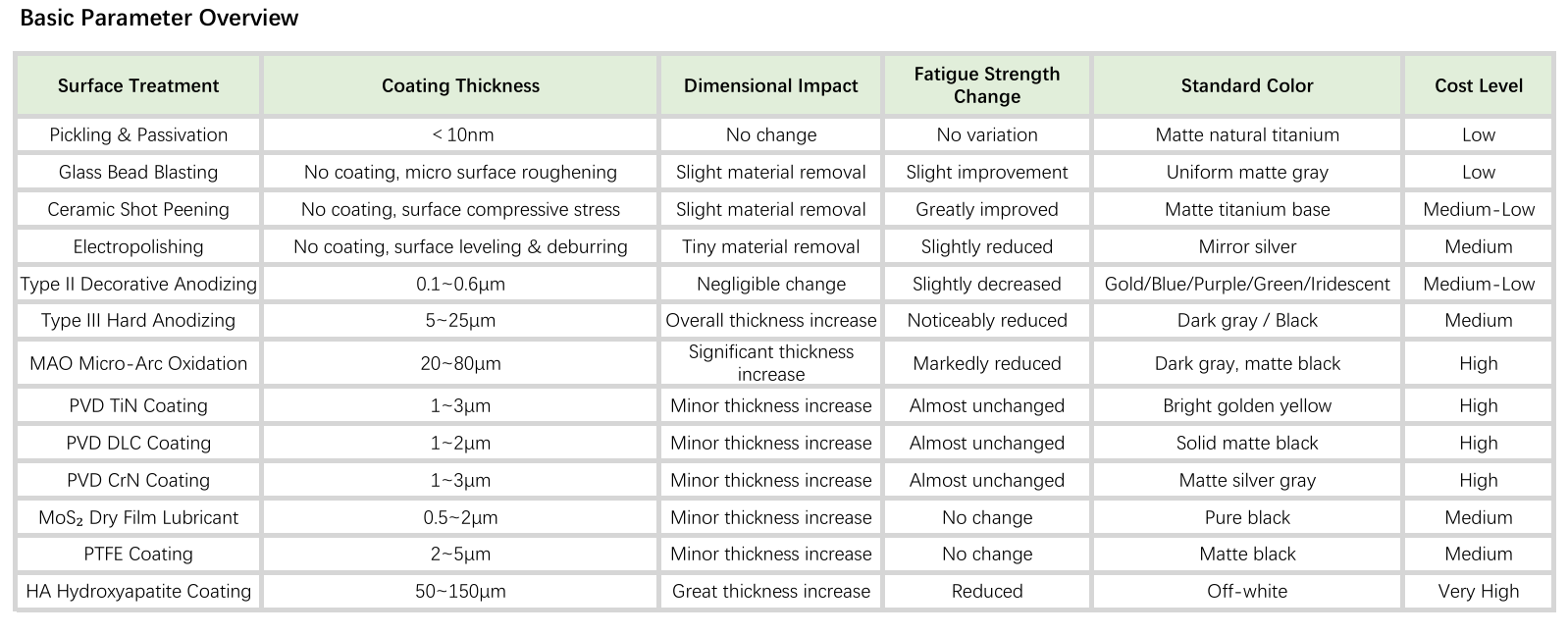
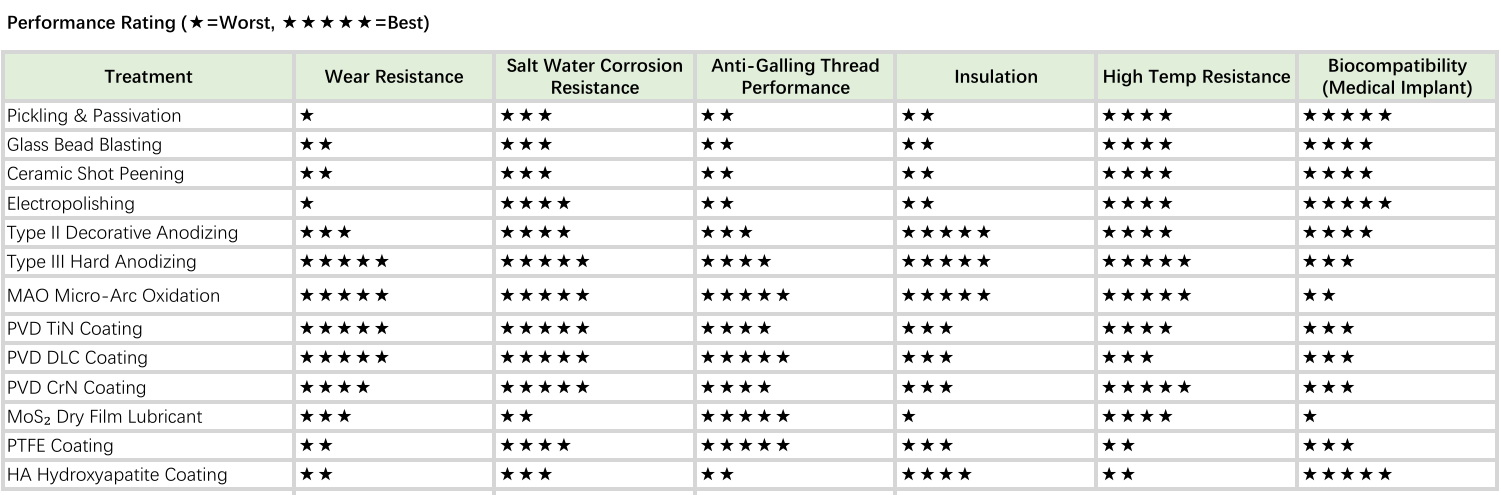
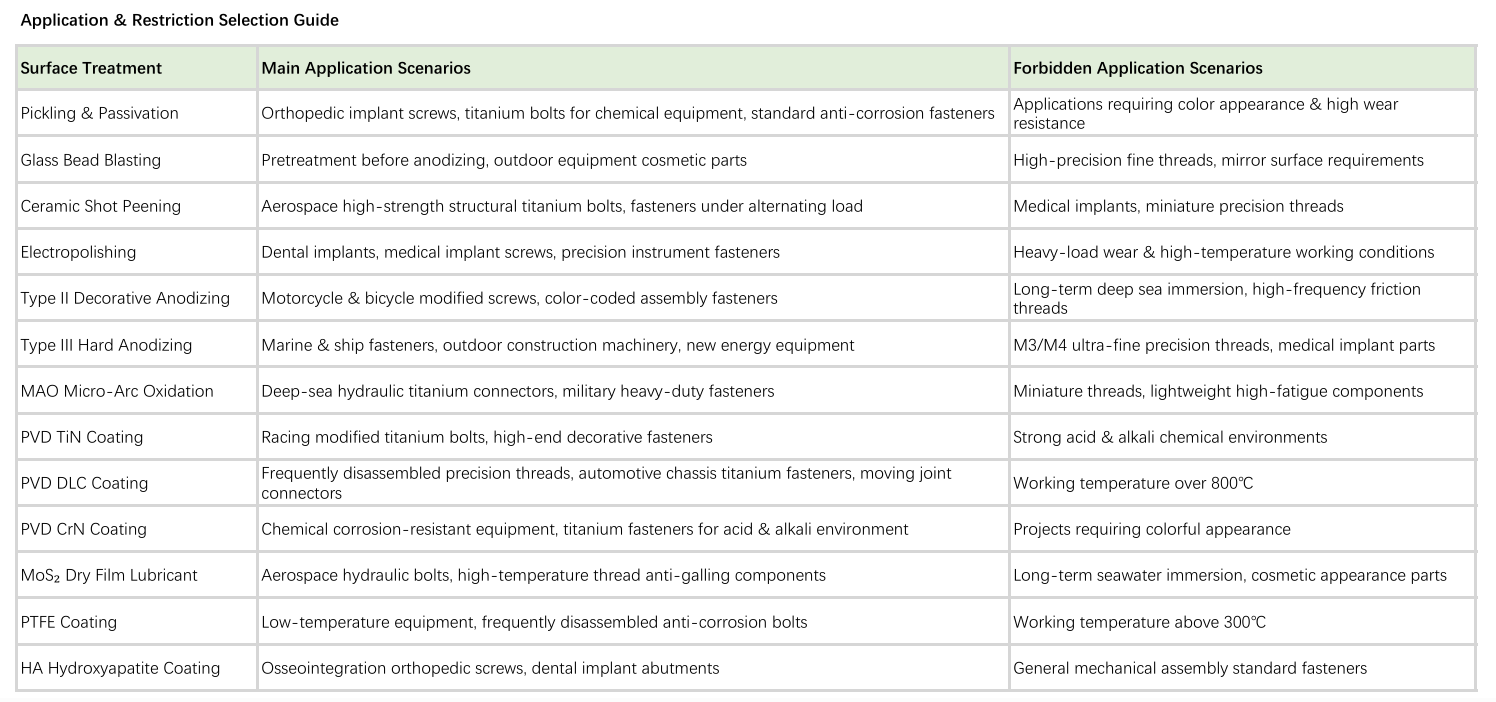
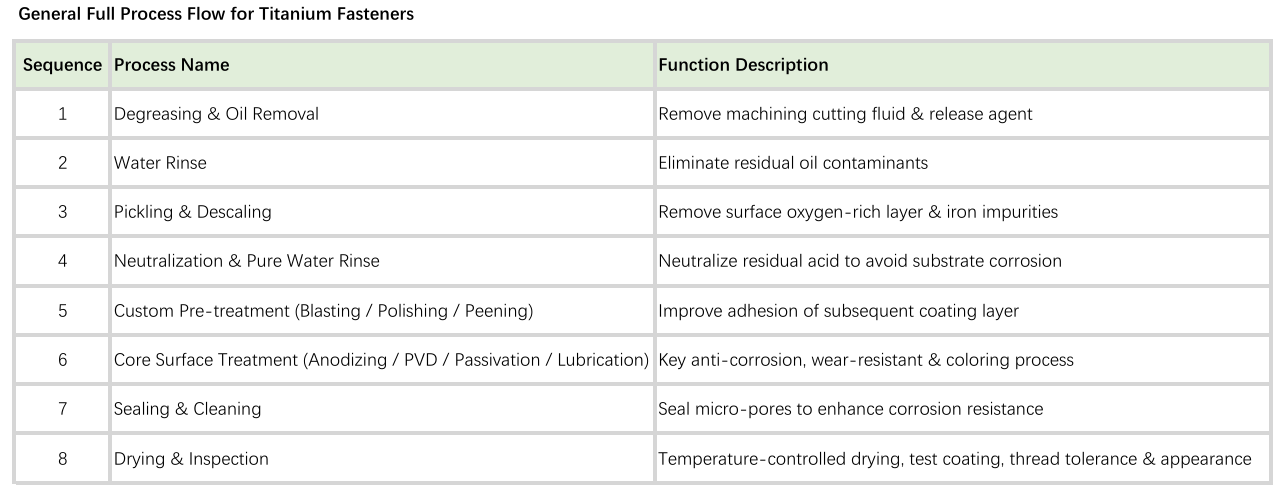
Titanium fasteners stand as vital connecting parts for aerospace, marine, medical implant, and new energy industries, valued for lightweight, high specific strength and native corrosion resistance. However, titanium’s unique metallurgical traits easily trigger thread galling and surface oxidation, requiring targeted surface treatment solutions to extend service life and stabilize assembly performance.Manufacturers have established a complete standardized processing system covering pre-treatment, anodizing, MAO, PVD vacuum coating and functional lubricant coatings. Pre-treatment serves as the mandatory foundation for all procedures: pickling & passivation meets medical biocompatibility standards; ceramic shot peening upgrades fatigue strength for aerospace structural fasteners; electropolishing delivers ultra-smooth surfaces for dental implants.
Anodizing remains the most cost-effective mainstream solution. Type II decorative anodizing creates thin, colorful films for component marking and cosmetic use, while Type III hard anodizing offers outstanding wear and salt spray resistance for marine facilities. MAO micro-arc oxidation produces ultra-thick ceramic layers to withstand extreme deep-sea and military working conditions.High-end precision applications adopt low-temperature PVD coatings including TiN, DLC and CrN, balancing decorative appearance, chemical resistance and anti-galling performance. Lubricant coatings such as MoS₂ and PTFE eliminate titanium’s inherent thread biting issues for high-temperature and repeatedly disassembled fasteners. HA hydroxyapatite coating is exclusively customized for orthopedic implant screws to accelerate bone integration.Engineers note that rational process matching is critical to product reliability. Precision micro-threads adopt thin-film anodizing or PVD to avoid tolerance deviation; medical implants strictly apply passivation and electropolishing. Moving forward, titanium surface treatment will advance toward composite, high-precision and eco-friendly technology to support high-end equipment manufacturing upgrades.
Attached Four Professional Comparison Tables: