


The manufacturing process of titanium tees
View More
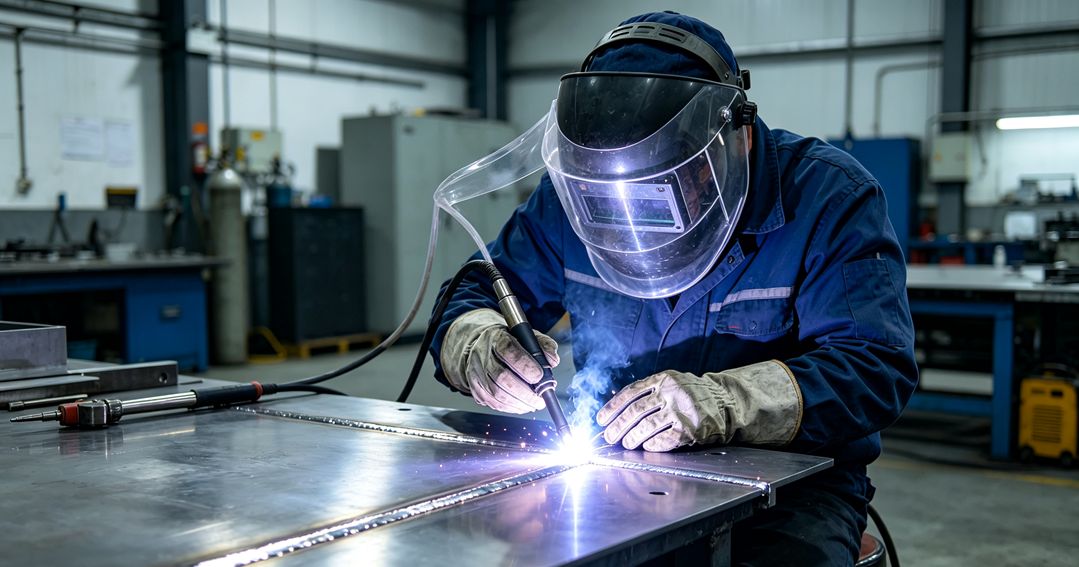
If you've ever watched an experienced welder work with titanium in a workshop, you'll notice something peculiar: a transparent "shroud" surrounds the welding torch, and even after welding is finished, the argon gas keeps flowing over the weld bead for a good while.
Welding steel isn't nearly this troublesome—once you're done, you're done.
The reason titanium is so "fussy" lies in a fatal weakness at high temperatures: it reacts far too readily with oxygen, nitrogen, and hydrogen. Above 400°C, titanium becomes extremely chemically active. With a molten pool temperature exceeding 1668°C, titanium is, at that heat, almost eager to absorb everything around it. Oxygen and nitrogen infiltration make the weld brittle; hydrogen infiltration sharply reduces the weld's impact toughness.
An increase of just 0.01% in oxygen content can cause a 20% drop in impact toughness.
So the number one rule of welding titanium isn't "make it look pretty"—it's "keep air away from the molten pool."
The welding methods that are absolutely off-limits
Some conventional steel-welding methods are a disaster when applied to titanium.
CO₂ gas-shielded welding—CO₂ is a strong oxidizer; after welding, titanium alloy can become so brittle it snaps when bent. Stick electrode arc welding—the flux coating burns and releases impurities, leaving the weld full of porosity. Oxy-acetylene welding—combustion products directly contaminate the weld.
These three methods are strictly forbidden in titanium welding.
So what's used instead? The mainstream choice is Tungsten Inert Gas (TIG) welding, suitable for thin-walled parts under 3 mm; Metal Inert Gas (MIG) welding, for medium-to-thick plates above 3 mm; and high-energy beam processes like vacuum electron beam welding and laser welding. Vacuum electron beam welding operates in a vacuum, "sealed off" from the environment, making it especially suitable for aerospace fuel tanks and other components requiring "zero-defect" standards. Laser welding, with its high energy density and small heat-affected zone, is increasingly used in thin-walled structures and medical devices.
Shielding gas: If purity falls short, all effort is wasted
Argon purity must reach 99.99% —that is, 4N grade, with a dew point ≤ -40°C and total impurities < 0.001%.
To put that in perspective: it's drier than Antarctica.
Flow rates also require precision: nozzle shielding gas at 15 to 25 L/min, back-side shielding gas at 5 to 10 L/min. When welding titanium tubes, the inside of the tube must be filled with argon at a pressure of 0.01 to 0.03 MPa—essentially fitting the weld with an "oxygen mask." Flow velocity must not be too high; exceeding 30 L/min creates turbulence that can actually "pull" air into the molten pool.
And after welding, you can't withdraw the gas immediately—argon must keep flowing until the weld temperature drops below 350°C. The whole process is like providing "round-the-clock care" to the weld.
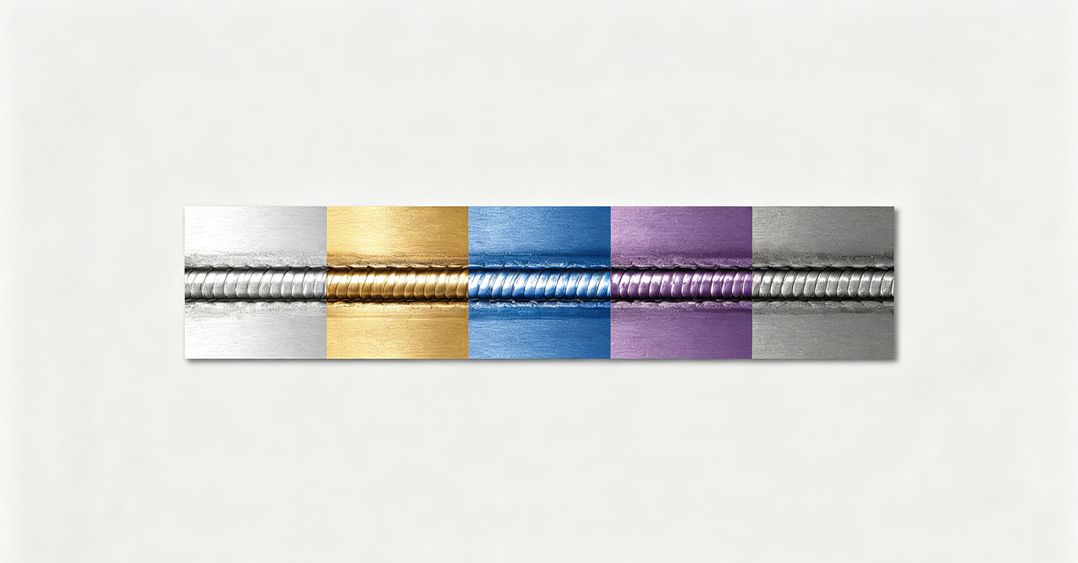
The color tells you if it's good or not
Titanium welding has a particularly intuitive quality check: look at the color of the weld.
Silver-white—the best; the weld is almost completely unoxidized.
Pale yellow or golden—slight oxidation; generally still usable.
Blue—oxidation is already severe.
Purple or gray—heavy contamination; basically scrap.
The progression from silver-white to golden to blue to purple to gray represents a gradual worsening of oxidation. An experienced welder can take one look at the color and know exactly how well the job was done.
Silver-white means excellent; dark blue means reject.
Common pitfalls: Porosity and cracks
The most frequent problems in titanium welding are porosity and cracking.
Porosity tends to appear near the fusion line, with hydrogen being the culprit. Titanium's solubility for hydrogen differs greatly between solid and liquid states; during welding, hydrogen doesn't have time to escape and gets trapped in the weld as pores. Solutions include preheating to 100–200°C to drive off moisture, using dual gas shielding, and keeping torch angle deviation within 5°.
Cracking is even trickier—it's often delayed cracking, not appearing immediately after welding but emerging 24 to 48 hours later. The cause is hydrogen diffusing from the high-temperature molten pool into the cooler heat-affected zone, combined with the effects of welding stress. Preventive measures include thoroughly cleaning the weld area before welding, reducing hydrogen sources, and performing post-weld annealing at 800–850°C.
Where is titanium welding used?
Aerospace is the largest application field for titanium welding. Aircraft wings, fuselage skins, engine components, and rocket fuel tanks all rely on titanium welding. In welding titanium alloy fuel tanks, using high-purity argon shielding can achieve weld strength reaching 85% to 90% of the parent metal.
Marine and ocean engineering are also major areas. Titanium is known as the "marine metal" due to its exceptional resistance to seawater corrosion. As deep-sea equipment moves toward larger sizes and lighter weight, the demand for welding thick titanium alloy plates is growing.
The medical field likewise depends on titanium welding—joining artificial joints and orthopedic implants demands extremely high weld purity. Chemical equipment, nuclear containers, deep-sea submersibles—wherever lightness, strength, and eternal corrosion resistance are required, titanium welds are there.
Conclusion
Titanium welding is so "fussy" because titanium is just too "reactive" at high temperatures—it wants to absorb everything, and once it does, it turns brittle.
So the entire process of welding titanium is essentially a protracted battle against air: use high-purity argon to keep oxygen, nitrogen, and hydrogen all outside the weld zone, and never let your guard down—from pre-weld cleaning to post-weld cooling.
The weld color shifting from silver-white to blue is the signal that the battle has been lost.
Welding steel is craftsmanship; welding titanium is mastery.

Hello, I am the online customer service
