


The manufacturing process of titanium tees
View More
When you hold a smooth, rigid titanium bar or a flat, dense titanium sheet, it is hard to imagine its original form—a rough, porous, rock-like gray raw material called "sponge titanium." Many people wonder: why is titanium processing so much more difficult than that of ordinary metals? Why is its price significantly higher than conventional steel? The answers lie in its complete transformation journey from a coarse primary material to a core industrial resource. Today, let's step into the production floor to uncover how titanium undergoes layers of refinement to ultimately become high-performance titanium products suited for aerospace, medical devices, industrial manufacturing, and many other fields.
Starting Point: Sponge Titanium That Looks Like Rock
Every titanium product's story begins with sponge titanium.
It is not the cleaning sponge used in daily life, but rather primary titanium metal refined through the Kroll process. With its porous, rock-like appearance, its core purity can reach over 99.7%, yet it is soft and loosely structured, making it entirely unsuitable for direct industrial application.
At this stage, sponge titanium is like unprocessed grain—only through multiple precise processes can its performance limitations be overcome, transforming it into the "hardcore material" that supports industrial production.
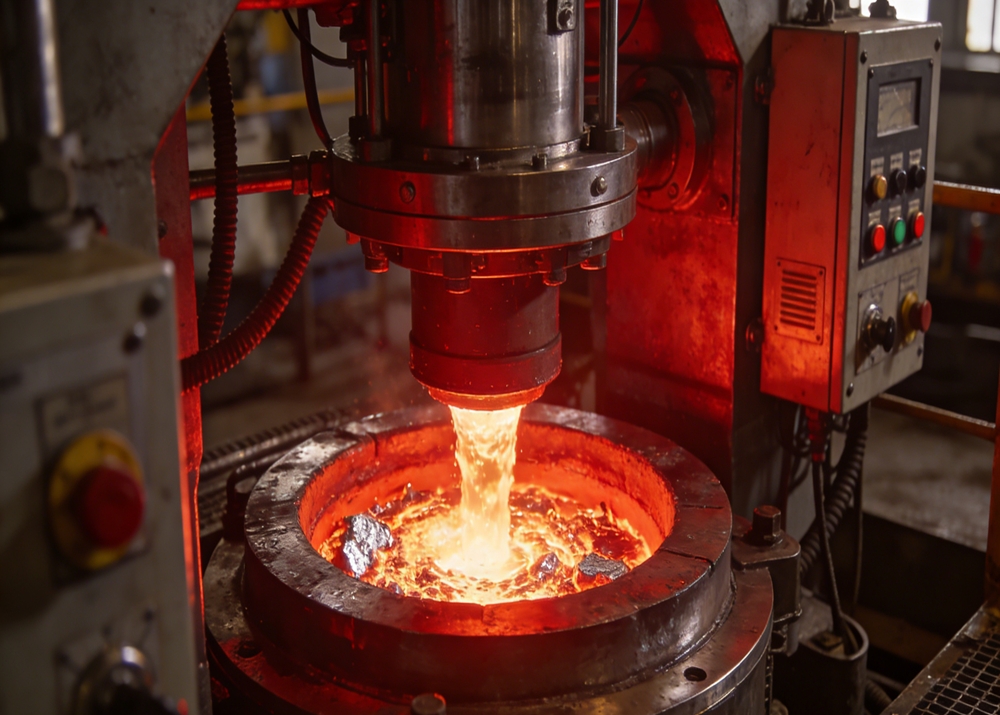
Step 1: Vacuum Melting — Ultimate Purification That Isolates Impurities
Titanium is known as a "reactive metal at high temperatures." In its molten state, it readily reacts with oxygen, nitrogen, and hydrogen in the air. Even trace amounts of impurities can cause embrittlement and a sharp reduction in strength, rendering the material completely unusable.
Therefore, titanium melting must be carried out in an absolutely pure vacuum environment, following a rigorous and exacting procedure:
To achieve the required purity and compositional uniformity, this process is typically repeated two to three times. For higher-performance titanium products, four remelting cycles may be performed. This repeated refinement, akin to the concept of "tempering steel through repeated processing," thoroughly eliminates trace impurities and refines the solidification structure. The result is a dense, compositionally uniform, high-purity cylindrical titanium ingot—the essential foundation of high-quality titanium products.
Step 2: Plastic Working — Precise High-Temperature Shaping to Forge Core Properties
Although the formed titanium ingot meets purity requirements, its internal grains remain coarse, and its mechanical properties have not yet reached the rigorous standards required for industrial applications. It must undergo customized plastic working—an intensive training process. Titanium's deformation resistance is two to three times that of ordinary steel, and its thermal conductivity is extremely poor (only one-fifth that of steel), making it a quintessential "difficult-to-machine material." Therefore, the appropriate precision processing method must be selected based on the specific application scenario:
This process is akin to "high-temperature shaping training" for titanium. Temperature control precision must reach ±5°C, and pressure application requires real-time feedback adjustment. Even slight deviations can lead to material cracking, significantly compromising performance.
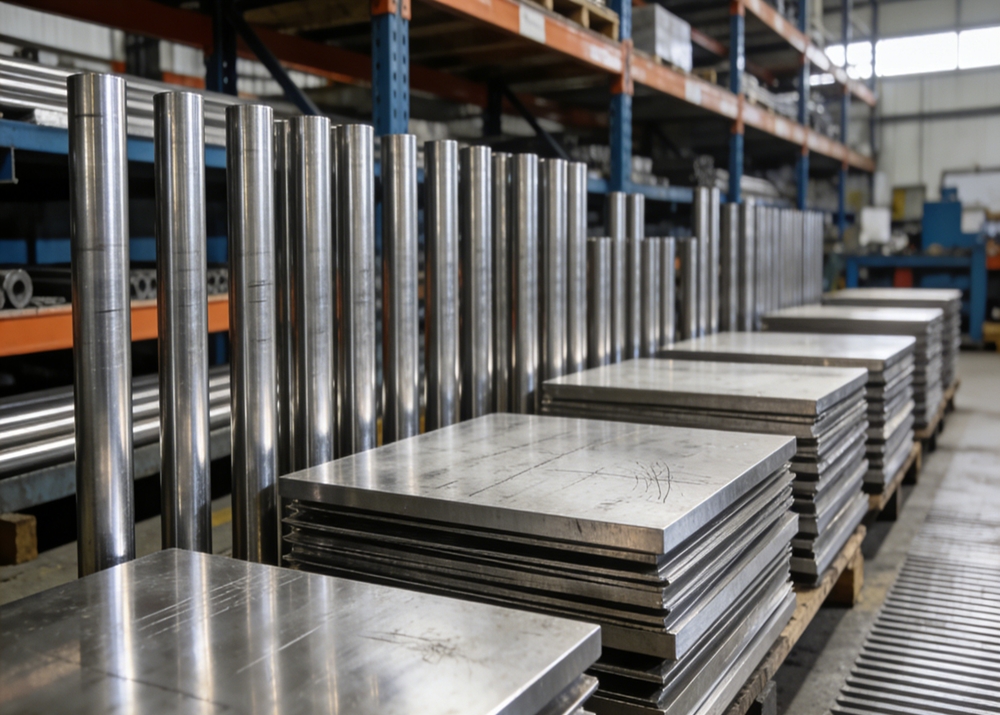
Step 3: Finishing and Inspection — From Precision to Qualification, Safeguarding Quality
After high-temperature shaping, titanium products develop a layer of oxide scale on their surface. Dimensional accuracy also requires further optimization. More critically, any minute defects that could potentially affect operational safety must be identified.
The final finishing and inspection stage represents the "ultimate test" for titanium:
Only after passing all these stringent inspections, with every parameter meeting industry standards, can a piece of titanium be considered a truly qualified industrial product.
Understanding the Process Reveals the Value of Titanium
Every titanium bar and every titanium sheet represents the industrial intelligence embodied in precision smelting, accurate processing, and rigorous inspection. The number of melting cycles determines purity, the processing method determines mechanical properties, and inspection standards determine safety and reliability. Ultimately, these factors enable titanium to become the core material supporting high-quality development across aerospace, medical devices, industrial manufacturing, and other fields.

Hello, I am the online customer service
