


The manufacturing process of titanium tees
View More
In highly corrosive environments such as chemical processing, seawater desalination, marine engineering, new energy, and high-end equipment manufacturing, titanium flanges have become the core connecting components in industrial piping systems, thanks to their inherent corrosion resistance, light weight, high strength, and long service life.
Compared with carbon steel, stainless steel, and electroplated flanges, titanium flanges have an extremely low failure rate. However, due to factors such as installation specifications, operating conditions, component matching, and daily maintenance, a few common issues can still occur. This article systematically summarizes the most frequent problems with titanium flanges, their causes, solutions, and standardized daily maintenance procedures, helping enterprises reduce piping system failures, extend equipment service life, and lower downtime costs.
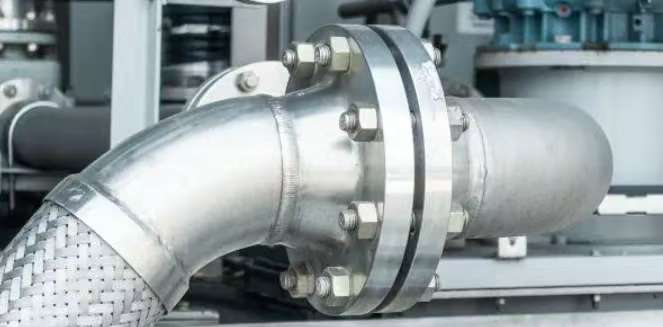
Common Issues and Solutions in Daily Use of Titanium Flanges
1.Minor Leakage or Weeping at the Sealing Face
This is the most common issue in titanium piping, but it is rarely caused by corrosion of the titanium itself—it is mostly due to assembly and sealing problems.
Main causes:
-Uneven tightening torque, resulting in insufficient local compression.
-Residual impurities or fine particles on the sealing face.
-Incompatible gasket selection (using non-titanium-specific gaskets).
-Bolt stress relaxation due to alternating hot/cold operating conditions.
Solutions:
-With the equipment shut down and depressurized, re-tighten diagonally to standard torque.
-Disassemble, clean the sealing face (avoid scratching the titanium surface with hard objects).
-For highly corrosive conditions, always use titanium gaskets or PTFE composite gaskets.
-For high-temperature conditions, perform a secondary hot-tightening to eliminate stress relaxation.
2.Scratches, Indentations, or Blackening on the Sealing Face
Titanium flanges are not easily corroded, but iron contamination or improper handling can damage the passive surface film.
Main causes:
-Using carbon steel tools to strike or rub the flange during installation.
-Adhesion of carbon steel dust or rust, causing free iron contamination.
-Hard foreign particles trapped between sealing faces.
Solutions:
-Minor scratches: Clean with purified water and a special polishing pad; allow natural re-passivation.
-Deeper scratches: Have the sealing face precision-machined by a professional shop.
-Isolate carbon steel tools throughout installation to avoid iron contact with the titanium surface.
3.Galvanic Corrosion from Dissimilar Metal Contact
Many users mistakenly believe titanium will not corrode, overlooking material compatibility—this is the number one hidden failure in titanium piping systems.
Main causes:
-Titanium flanges used with carbon steel bolts or ordinary stainless steel fasteners.
-Different potential metals in a moist, salt-spray, or electrolyte environment forming a galvanic cell.
Solutions:
-Use titanium bolts, nuts, and washers throughout the system.
-When dissimilar materials must be used, install insulating washers and sleeves for isolation.
-In highly conductive environments such as seawater or chlor-alkali, never allow direct contact of dissimilar metals.
4.Localized White Spots, Stains, or Crevice Corrosion
This is not a quality problem with the titanium, but usually a design or material selection deviation.
Main causes:
-Using ordinary TA2 (Grade 2) pure titanium in high‑chloride or high‑temperature seawater conditions.
-Accumulated fluid or long‑term retention of corrosive media in flange crevices.
-The passive film continuously eroded by flowing media and unable to re-form.
Solutions:
-For high‑salt, seawater, or chlor‑alkali environments, upgrade to TA9 (Grade 7) or TA10 (Grade 12) corrosion‑resistant titanium alloys.
-Regularly clean crevices to remove residual fluid and keep surfaces clean and dry.
-For high‑temperature corrosive conditions, upgrade the alloy grade to improve resistance to crevice corrosion.
5.Flange Deformation, Warping, or Seal Failure
This rarely occurs and is usually caused by external forces or operation beyond design limits.
Main causes:
-Excessive tightening torque or brute‑force installation.
-Operation above pressure, temperature, or load ratings.
-Pipe stress pulling the flange end out of shape.
Solutions:
-Install to ASME standard torque specifications; never over‑tighten.
-Check for pipe stress and add adequate supports.
-For severely deformed flanges, return to the manufacturer for precision re‑machining of the sealing face or replace with new flanges.
Standardized Daily Maintenance and Care for Titanium Flanges
The greatest advantage of titanium flanges is their extremely low maintenance requirement and long life. With proper care, they can provide 15–30 years of reliable service.
1.Routine Inspection (once a month for normal conditions)
-Visually check for dirt, liquid accumulation, or mechanical scratches on the flange surface.
-Inspect connections for signs of leakage, salt deposits, or scale.
-Check bolts for tightness, looseness, or rust.
-Confirm no obvious deformation or displacement of the flange.
2.Cleaning Requirements
-For routine cleaning, use clean water or a mild neutral detergent.
-Do not use strong acids or alkalis to directly wash the titanium surface.
-Do not use steel wool or wire brushes on the titanium sealing face.
-Clean residual media from crevices to avoid long‑term accumulation and corrosion.
3.Seasonal and Operating Condition Maintenance
-Salt‑spray / coastal environments: Increase cleaning frequency to prevent salt buildup that could damage the passive film.
-High‑temperature operation: Perform a hot‑tightening re‑check after startup and warm‑up.
-Intermittent service: Check seal condition before startup to avoid leakage due to thermal cycling.
4.Key Points for Protecting the Passive Film
The corrosion resistance of titanium flanges comes entirely from the surface titanium dioxide passive film:
-Minor wear will self‑repair in air or water.
-Iron contamination, dry friction, or strong acid erosion can inhibit repassivation.
-Daily care focuses on keeping the surface clean, avoiding iron contamination, and minimizing mechanical damage.
5.Periodic Life Assessment and Replacement Recommendations
-Normal chemical service: Perform a full re‑inspection of sealing face precision every 2–3 years.
-Severe service (seawater, deep‑sea, chlor‑alkali): Conduct a special inspection annually.
-No need for frequent replacement without structural damage—titanium flanges have no aging cycle.
Prohibited Practices (Critical Pitfalls to Avoid)
Summary
Titanium flanges are the most stable and lowest‑maintenance high‑end connection components for corrosive industrial piping systems. The vast majority of failures are not due to corrosion of the titanium itself, but are human‑induced problems caused by improper installation, mismatched accessories, or inadequate maintenance.
By simply ensuring proper material matching, standardized installation, and regular basic inspections, titanium flanges can achieve exceptionally long, reliable service life—dramatically reducing the risk of piping leaks, downtime losses, and replacement costs. They are the long‑term optimal solution for demanding industrial piping systems.

Hello, I am the online customer service
